
Affiliate disclosure: This article may include affiliate links. When you buy through one of these links, I may receive a commission. Your purchase price stays the same.
How do you feel when you hear someone quote Scripture from memory? Do you wish you could remember God’s Word with that same confidence?
I will show you a practical way to turn that desire into a daily practice. Set aside ten minutes a day for the next seven days, aiming to recall one short verse and its reference without looking.
While I was pastoring in Guyana, I helped a lady in our church memorize Scripture. In my 38 years of Christian ministry, I have helped many others do the same.
The approach I share here is simple: start with one verse, learn it in short phrases, and review it a little each day.
Set aside ten minutes a day for the next seven days, and aim to recall one short verse and its reference without looking by the end of the week. Let me walk you through it.
I want to walk you through that same approach so you can begin putting it into practice. Where should you begin? How do you remember a verse? And why does it matter? Let us work through those questions together.
Why memorize Scripture?
Keeping Scripture in memory gives us words to reflect on during ordinary moments, encouragement to share thoughtfully, and biblical truth to consider when we face decisions or temptation. Understanding what we remember helps us apply it with care.
Think about paying off a large debt. Clearing the smallest balance gives you a visible success and encouragement to tackle the next. We can approach Scripture memorization with that same willingness to begin with something manageable. Let’s choose your first verse together.
Free 7-Day Scripture Memory Guide
Practice the seven steps with a simple seven-day plan and Psalm 23:1 (KJV).
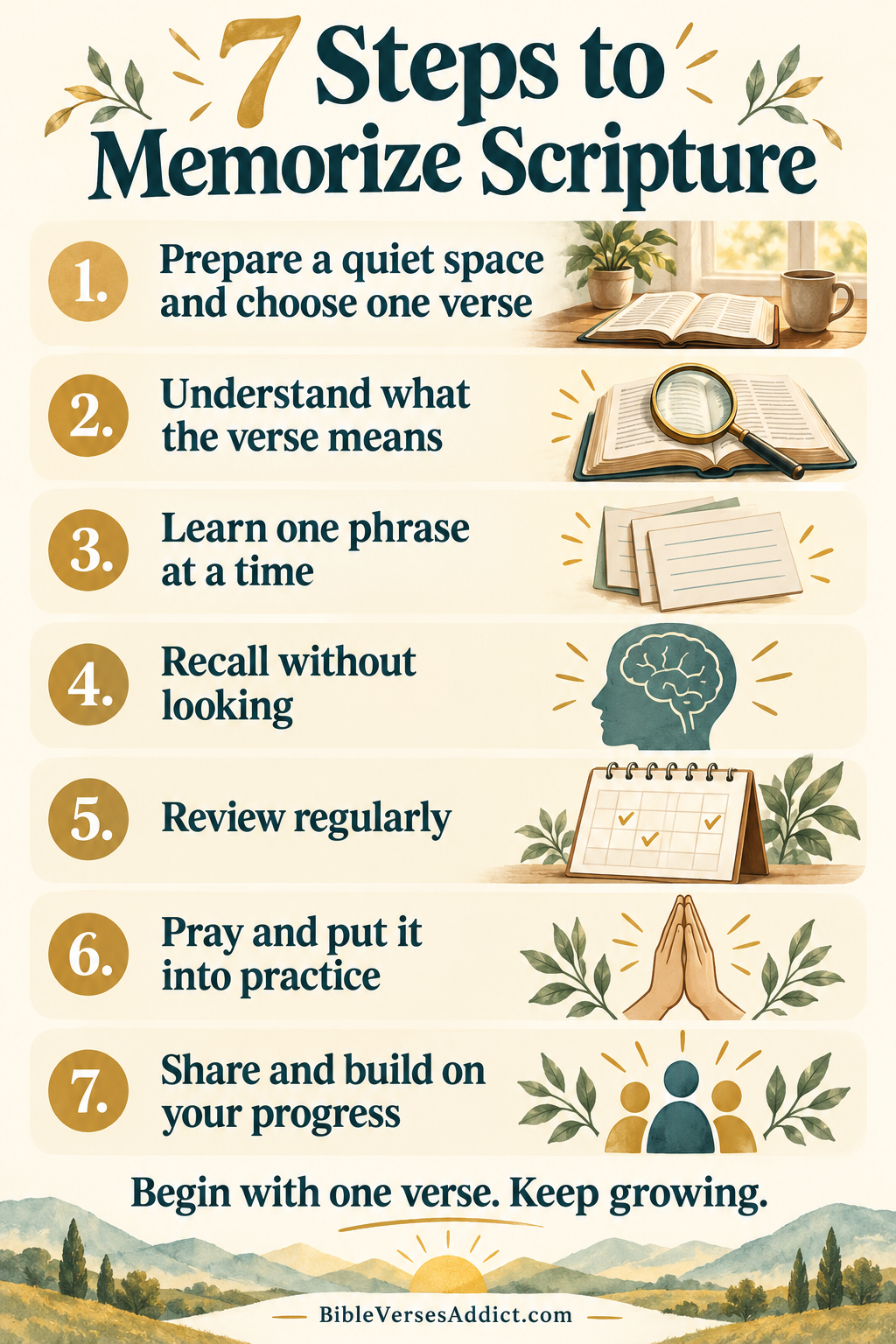
How to memorize Scripture: 7 practical steps
1. Prepare a quiet space and begin with one verse
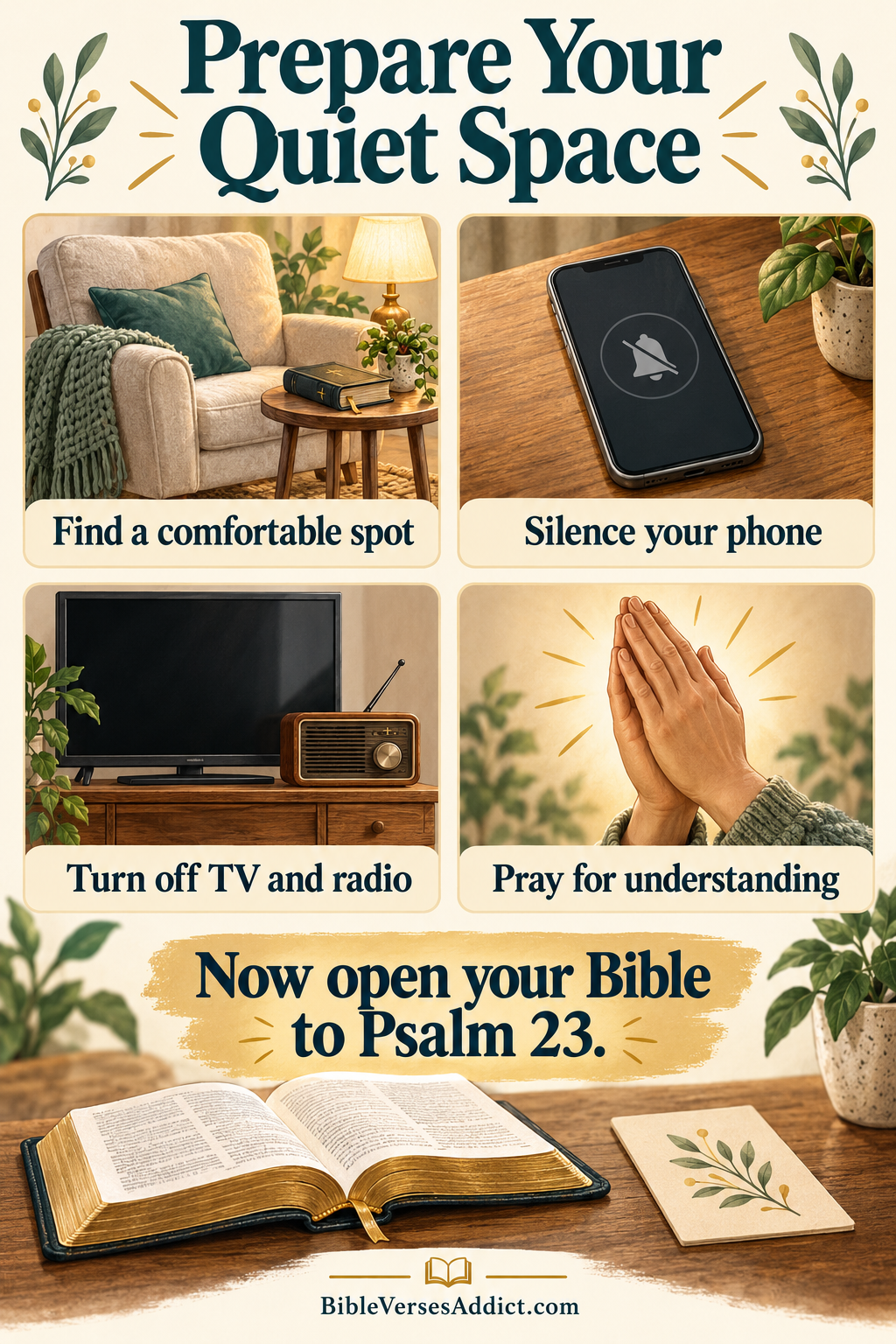
Before we choose our first verse, let’s prepare a place to give God’s Word our attention. Find a quiet, comfortable spot in your home, or somewhere you are unlikely to be interrupted.
Put your phone on silent and set it aside. Turn off the television and radio, and ask those around you for a few quiet minutes.
Take a moment to settle yourself. You do not have to rush. Begin with a simple prayer: “Lord, open my eyes to understand your Word. Help me to focus, remember what I read, and put it into practice. Amen.”
Now open your Bible to Psalm 23. Read the whole psalm slowly to understand the verse we will learn in context. Then copy verse one and its reference onto a card. Keep that card beside your Bible.
As you do this, let your hands and voice help your mind. Read the verse aloud, paying attention to each Word. Then cover it and try saying it from memory. If you miss a word, look again and practice that part before repeating the whole verse. Give yourself time to learn.
You’ve taken your first step. We’ll keep working with this same verse as we move through the next steps together.
2. Understand what the verse is saying
Before you try to remember every Word, pause and consider what it means. Psalm 23:1 says:
“The LORD is my shepherd; I shall not want.”
Psalm 23:1
Picture a shepherd caring for his sheep—leading them, feeding them, and watching over them. David uses that familiar picture to express his trust in God. “I shall not want” speaks of trusting God’s provision, rather than expecting to receive everything we desire.
Look at your card and ask yourself, “What does this verse teach me about God?” Explain the meaning in your own words. Then return to the exact words of the verse. Understanding its message gives you something meaningful to remember.
3. Learn one phrase at a time.
You do not have to learn the whole verse at once. Start with these words: “The LORD is my shepherd.”
Read that phrase aloud slowly. Cover it and try saying it without looking. Check your card, and repeat it until you can recall the words correctly.
Now practice the second phrase: “I shall not want.”
Once you feel comfortable with both phrases, put them together: “The LORD is my shepherd; I shall not want.” Say the reference too: Psalm 23:1.
Think back to our illustration about tackling a large debt in smaller amounts. Here, each short phrase gives you a manageable place to begin. As the phrases come together, you can see your progress.
4. Practice remembering without looking.
Place your card face down. Can you say the verse and its reference from memory?
Give yourself a moment before turning the card over. If you get stuck, look at the words you missed, cover the card again, and try once more. You can also write the verse from memory and compare it with your Bible.
Forgetting a word does not mean you cannot learn Scripture. It shows you which part needs a little more attention. Keep practicing patiently, checking that you are remembering the words accurately.
Practice it now: Psalm 23:1 (KJV)
Read the verse, then open each level to practice with fewer words showing.
The LORD is my shepherd; I shall not want.
Level 1: Hide the last phrase
The LORD is my shepherd; _____ _____ _____ _____.
Level 2: Recall both phrases
The LORD is my ________; I ________ ________ ________.
Level 3: Say the whole verse
Cover the verse above and recite Psalm 23:1 from memory. Then check the words and reference.
5. Return to the verse regularly.
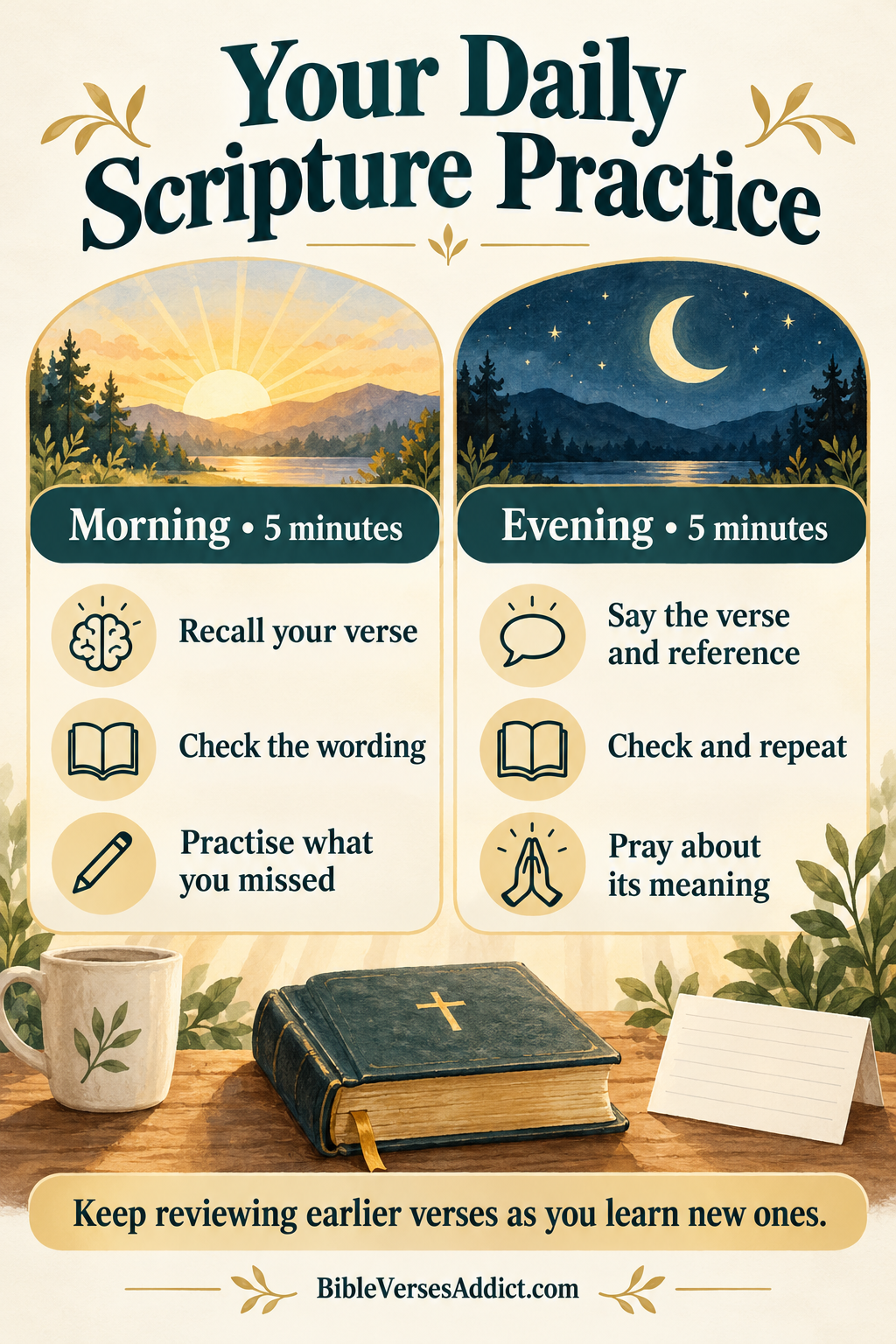
Make your practice a simple part of your day. For this first week, set aside five minutes in the morning and five minutes in the evening.
In the morning, try recalling the verse before checking your card. Read it carefully, correct anything you missed, and say it again. In the evening, return to the same verse and repeat the process.
Keep your card somewhere that will remind you to practice, perhaps beside your Bible. If you miss a session, begin again at the next opportunity. The goal is a habit you can continue.
After the first week, keep reviewing this verse as you begin another. Return to earlier verses so that learning something new also strengthens what you have already learned.
6. Pray about what you are learning and put it into practice.
The verse you are memorizing has a place in your daily life. Let its meaning shape your prayers and your response to what happens around you.
After saying Psalm 23:1, you might pray, “Lord, thank you for being my shepherd. Guide my decisions today and help me trust your care.”
Then ask yourself, “Where do I need God’s guidance today?” Perhaps you are facing a difficult conversation or worrying about a financial need. Bring that concern to God and consider how you can respond with trust and wisdom.
As you connect the verse to everyday situations, you learn to carry its message with you.
7. Share the verse and build on your progress.
At the end of the week, try saying Psalm 23:1 and its reference to a family member or friend without looking at your card. Explain briefly what the verse means and how it has encouraged you.
If you still need a prompt, keep practicing. Seven days gives you a clear goal, but you can take more time when you need it.
When you can recall the verse accurately, choose your next short passage. You can also explore Bible verses about faith as you continue. You could continue with Psalm 23:2, using the same process while reviewing verse one.
Think about what you have done. You prepared a quiet place, prayed, read the passage, wrote your verse, considered its meaning, and practiced recalling it. Those are practical steps you can use again.
Your next verses to memorize.
Ready for another verse? Choose one of these passages in your King James Bible and practice it using the seven steps.
- Isaiah 41:10: Encouragement when you feel afraid.
- Philippians 4:13: Strength through Christ.
- Proverbs 3:5: Trusting the Lord.
- Psalm 56:3: Trust when fear comes.
- Psalm 119:11: Keeping God’s Word in your heart.
- Psalm 23:2: Your next verse in Psalm 23.
Which verse are you memorizing this week? Share it in the comments.
Additional resources to strengthen your Scripture memorization.
To build on these seven steps and develop greater confidence in memorizing Scripture, here are two additional resources to explore:
- How to Memorize Scripture for Life by Andrew M. Davis. I recommend considering this book if you want a more sustained approach to reviewing and retaining longer passages of Scripture.
- Memorizing Scripture by Glenna Marshall. This is a helpful next resource for readers looking to make Scripture memory part of everyday Christian life.
As you continue learning, keep putting these steps into practice. Start with one verse, return to it regularly, and let God’s Word shape your thoughts, guide your choices, and strengthen your faith.
Keep learning: related Bible reading.
After practicing Psalm 23:1, explore Bible verses about faith, Bible verses for life’s struggles, and Bible verse apps that can help you review regularly.
Begin with one verse today.
Explore Bible Verses About Faith →
You may have begun this article wondering whether you could remember Scripture. Now you have a practical place to start: one verse, a quiet space, and a few minutes each day.
Keep your card close this week. When you sit down to practice, ask God for understanding, give the words your attention, and try recalling them before you look. If you forget something, return to it patiently. Give yourself time to learn.
As you remember “The LORD is my shepherd; I shall not want,” pause to consider the truth you are carrying with you. In moments of worry or uncertainty, let those words prompt you to pray and trust God’s care.
Before you move on with your day, choose a time for your next practice session. You have already taken the first step. Keep building on it, one verse at a time, and let God’s Word shape your thoughts, guide your choices, and strengthen your faith.
About the Author

Ordained Christian Minister Since 1988
Pastor David Small has served in Christian ministry for 38 years, preaching, teaching, and encouraging believers to grow in their relationship with God. His experience includes pastoral leadership, evangelism, biblical teaching, and helping individuals and families navigate life’s challenges through faith and prayer.